Showing posts with label Animal Photography. Show all posts
Showing posts with label Animal Photography. Show all posts
Sunday, June 28, 2015


Sunday, May 25, 2014
Sunday, October 20, 2013
THREE AMIGOS Yellowstone National Park
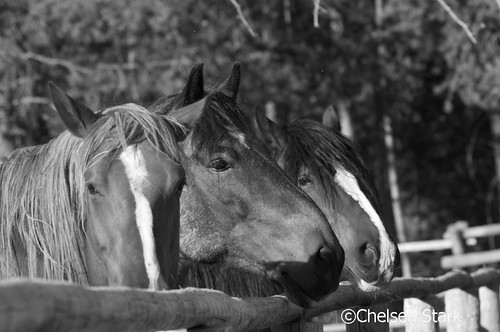
A black and white of three horses.
Sunday, August 4, 2013

Sunday, July 28, 2013
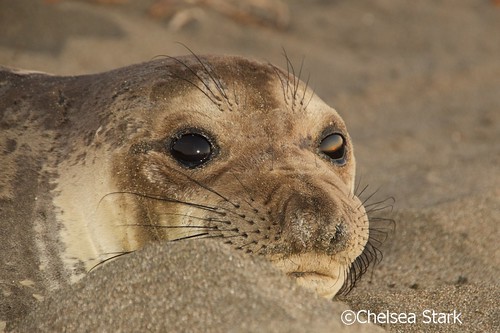
California sea lion
Sunday, July 7, 2013
Sunday, June 30, 2013
Sunday, June 9, 2013

Sunday, May 19, 2013
Scarface Yellowstone National Park
Sunday, May 5, 2013
The giant panda is universally admired for its appealing markings and seemingly gentle demeanour

Via Flickr:
The giant panda (Ailuropoda melanoleuca) is universally admired for its appealing markings and seemingly gentle demeanour. A member of the bear family, the giant panda is a robust animal with heavy shoulders and a distinctive black and white coat.
Most of the body and belly of the giant panda are white, contrasting sharply with the black ears, black limbs and shoulders, and black patches over the eyes. The male giant panda is slightly larger and heavier than the female.The giant panda has a relatively large head and large, muscular jaws, while its molars and premolar teeth are wider and flatter than those of other bears, allowing it to grind bamboo. This species is also unusual in having a ‘thumb’, which is actually a modified wrist bone that enables the giant panda to dextrously grasp bamboo stalksMost of the body and belly of the giant panda are white, contrasting sharply with the black ears, black limbs and shoulders, and black patches over the eyes. The male giant panda is slightly larger and heavier than the female.The giant panda has a relatively large head and large, muscular jaws, while its molars and premolar teeth are wider and flatter than those of other bears, allowing it to grind bamboo. This species is also unusual in having a ‘thumb’, which is actually a modified wrist bone that enables the giant panda to dextrously grasp bamboo stalks.
Sunday, April 28, 2013
Sunday, April 21, 2013
Sunday, April 14, 2013
Signme "A closeup of a wide eye siameese cat

A closeup of a wide eye siameese cat. Got milk?
Sunday, March 24, 2013
The dance of the peacock

Solomon did not pray that God would make him rich, or that he would give him health, or let him live a great many years on the earth; but he said, "I am a little child, I know not how to go out or come in. Give therefore thy servant an understanding heart." Then God was pleased with what he asked, and besides giving him great wisdom, he gave him also riches and honor. He had forty thousand horses, and silver and gold in abundance. All the vessels used in his house were of gold, because silver was not good enough; it was "as stones" for plenty, and was "nothing accounted of in the days of Solomon." In the second chapter of Ecclesiastes, Solomon himself speaks of his riches, and after telling us of some of his treasures, he says: "Whatsoever my eyes desired I kept not from them; I withheld not my heart from any joy." Perhaps you think he must have been perfectly happy, if any man in this world ever was; but what does he say? "All is vanity and vexation of spirit." This does not sound much like being contented. No, dear child, these are not the things that make us happy; nothing but the true love of God in the heart can do this.
There are many peacocks in India, and large flocks of them are sometimes seen around the temples; they also live among the bushes near the banks of rivers. They sometimes rest on high trees, but always make their nests on the ground, under the shrubs.
Sunday, March 3, 2013
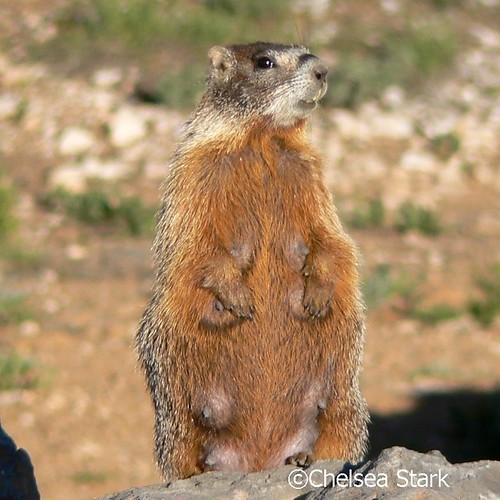
Yellow-bellied Marmot ~-bellied Marmot ~Mom
Sunday, February 10, 2013
A single Pink flamingo
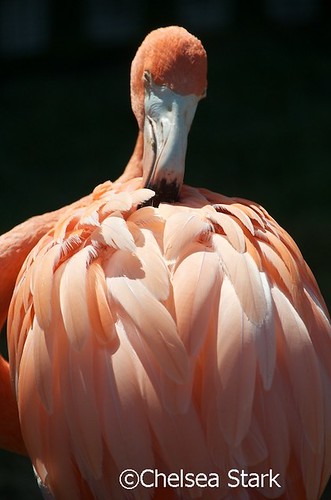
These famous pink birds can be found in warm, watery regions on many continents. They favor environments like estuaries and saline or alkaline lakes. Considering their appearance, flamingos are surprisingly fluid swimmers, but really thrive on the extensive mud flats where they breed and feed.
Sunday, February 3, 2013
Sunday, November 11, 2012
Marmot " A Yellow-bellied marmot
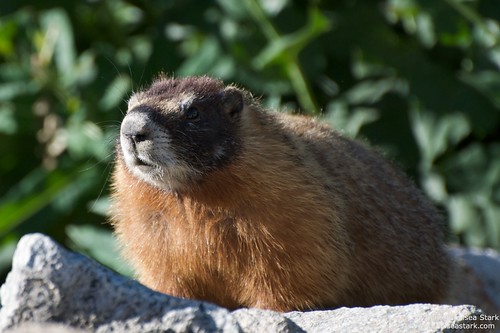
Yellow-bellied marmots generally live in moderately warm, dry habitats at low to mid elevations. They are found in many different habitats, including semi-desert, woodland and forest openings, and the alpine zone. Those that live further south live at higher elevations. For example, in the White Mountains of California they are found only above 2000 m. Moreover, because of absence from valleys, southern populations are isolated from one other, forming isolated populations. It can be inferred that the presence of hoary marmots inhibit the distribution of yellow-bellied marmots in certain high elevation areas, as both occupy subalpine and alpine areas. Yellow-bellied marmots inhabit vegetated fortified slopes or rock outcrops in meadows, which serve as support for the burrows that they reside in, as well as sunning and observation posts. The main entrance of burrow, which they dig themselves, is usually about 0.6 m deep into the ground, and extends about 3.8 to 4.4 m horizontally into the hillside. Many short tunnels branch from main passageway, sometimes connecting to other burrows. Burrows stay relatively stable and thus serve as preferable places to raise young, hibernate, and hide from potential predators.
Sunday, October 28, 2012
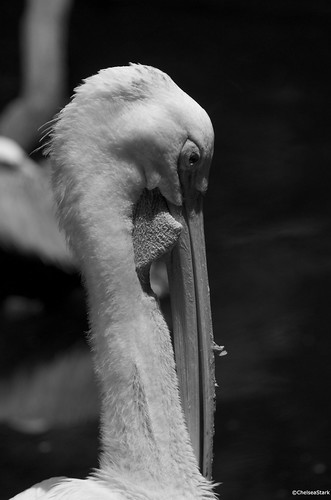
White Pelican." A black and whit of a bird
Sunday, October 7, 2012
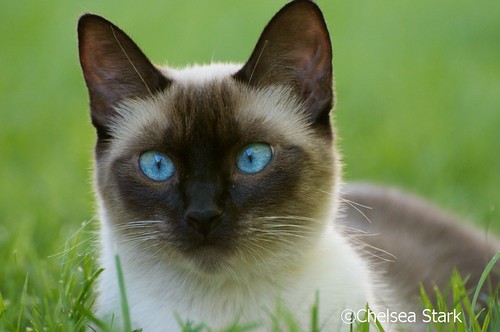
Simonize " cat. By Blind photographer Chelsea Stark
Subscribe to:
Comments (Atom)