Showing posts with label National Park Photography. Show all posts

Sunday, October 13, 2013

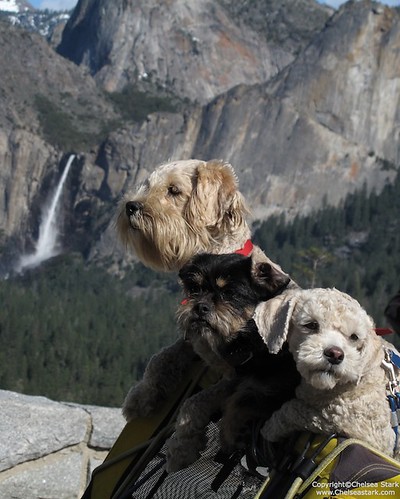
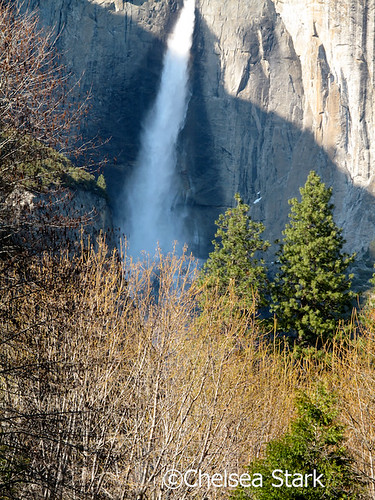
Upper Falls 1 Yosemite National Park

Upper Falls: The 1,430-foot (440 m) plunge alone is among the twenty highest waterfalls in the world. Trails from the valley floor and down from other park areas outside the valley lead to both the top and base of Upper Yosemite Falls. The upper fall is formed by the swift waters of Yosemite Creek, which, after meandering through Eagle Creek Meadow, hurl themselves over the edge of a hanging valley in a spectacular and deafening show of force.
Located in Yosemite National Park

Sunday, September 15, 2013

Tranquil falls"Yosemite National Park

Via Flickr:
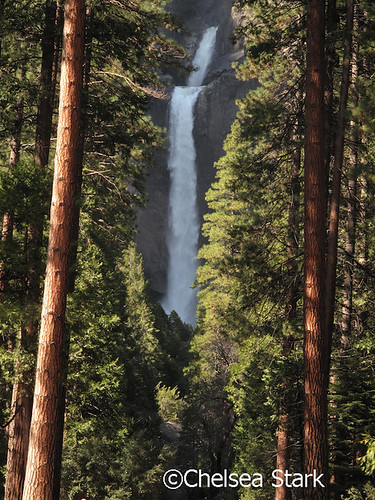
Yosemite Falls is the highest measured waterfall in North America. Located in Yosemite National Park in the Sierra Nevada of California, it is a major attraction in the park, especially in late spring when the water flow is at its peak.
The total 2,425 feet (739 m) from the top of the upper falls to the base of the lower falls[1] qualifies Yosemite Falls as the sixth highest waterfall in the world, though with the recent discovery of Gocta Cataracts, it appears on some lists as seventh.

Sunday, September 8, 2013

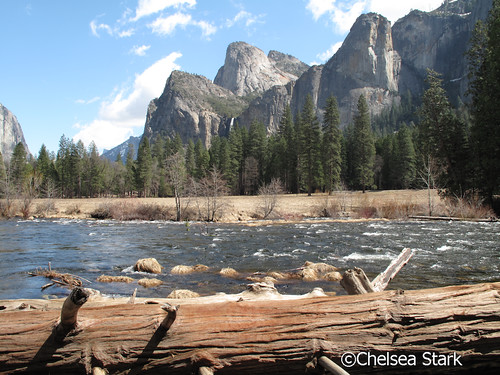
Merced" Yosemite National Park

Not just a great valley, but a shrine to human foresight, the strength of granite, the power of glaciers, the persistence of life, and the tranquility of the High Sierra.

First protected in 1864, Yosemite National Park is best known for its waterfalls, but within its nearly 1,200 square miles, you can find deep valleys, grand meadows, ancient giant sequoias, a vast wilderness area, and much more.

Monday, September 2, 2013

Watch Tower" Grand Canyon National Park

Watch Tower"Grand Canyon-ChelseaStarkhttp://www.chelseastarkphotography.com by chelseastarkphotography.com
Watch Tower", a photo by chelseastarkphotography.com on Flickr. Grand Canyon National ParkVia Flickr:When visiting the Grand Canyon in Arizona be sure to take the drive and tour the "watch tower." Mary Colter designed the Watch Tower to offer visitors "the widest possible view of the Grand Canyon." It was built by Fred Harvey and the Santa Fe Railroad and opened to the public in 1933. The Watch Tower is found at Desert View Point on the East side of the Grand Canyon. If you are already in the area, don't miss touring this neat historical tower. The paths are wide leading to the watch tower and you have wonderful views from both inside and outside of the Grand Canyon. You will make your way past the bathrooms and general store to your right.
The Watch Tower is attached to a gift shop, you can view the inside of the watch tower by walking through the gift shop and up the stairs.Inside the Watch Tower you'll find 4 sets of winding stairs that each lead to a circular room with views of the canyon.

Sunday, September 1, 2013

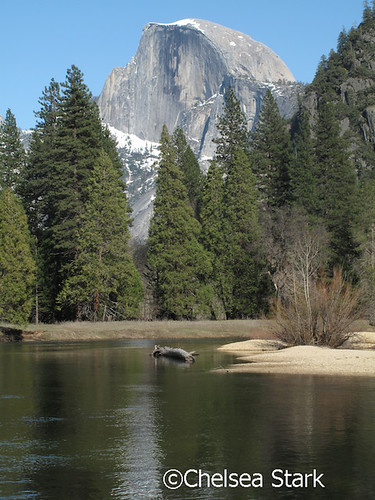
Half Dome 2" Yosemite National Park

Half Dome is a granite dome in Yosemite National Park, located in northeastern Mariposa County, California, at the eastern end of Yosemite Valley — possibly Yosemite's most familiar rock formation. The granite crest rises more than 4,737 ft (1,444 m) above the valley floor.

Sunday, April 7, 2013

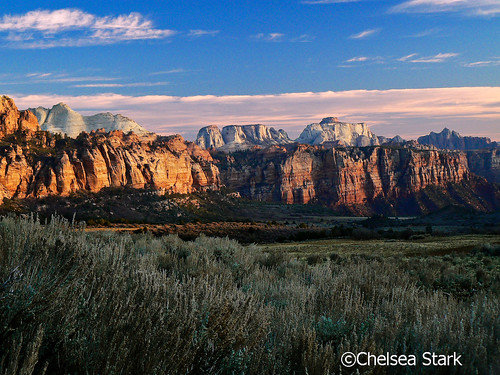
Zion Canyon

"Zion" Zion National Park-©ChelseaStark http://www.chelseastarkphotography.com by chelseastarkphotography.com
"Zion", Zion Canyon  a photo by chelseastarkphotography.com on Flickr.Via Flickr:Designated in 1919, Zion is Utah's oldest national park. The park is known for its incredible canyons and spectacular views. Famous hikes including The Narrows, Subway, and Angels Landing attract adventure enthusiasts from around the world. Hiking possibilities are endless. With nearly three million visitors per year, Zion is Utah's most heavily used park. Most park facilities are located in the Zion Canyon area, and it attracts the most visitors. There are four main sections in Zion National Park.

Sunday, March 10, 2013

Zion National Park

Zion" " National Park-ChelseaStark http://www.chelseastarkphotography.com by chelseastarkphotography.com
Zion" " National Park, a photo by chelseastarkphotography.com on Flickr.Follow the paths where ancient native people and pioneers walked. Gaze up at massive sandstone cliffs of cream, pink, and red that soar into a brilliant blue sky. Challenge your courage in a narrow slot canyon. Zion’s unique array of plants and animals will enchant you as you absorb the rich history of the past and enjoy the excitement of present day adventures.

Sunday, February 17, 2013

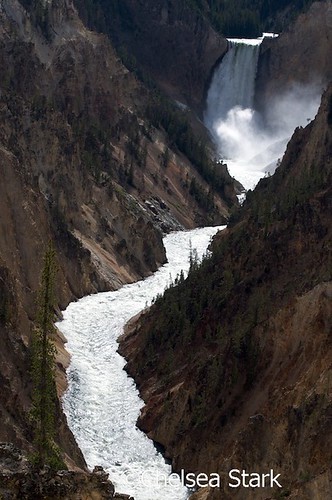
Yellowstone Falls" Yellowstone National Park-©ChelseaStarkh

Wine being falls ©ChelseaStark http://www.chelseastarkphotography.com by chelseastarkphotography.com
Yellowstone Falls" a photo by chelseastarkphotography.com on Flickr. The Yellowstone Falls are in Yellowstone National Park near Canyon village.This is one of the most impressive waterfalls in North America.

The Lower Yellowstone Falls are in Yellowstone National Park, near Canyon Village. This is one of the most impressive waterfalls in North America.
There are many areas from which to view the falls. Nice distant views can be had from Artist's Points, or the overlooks on the north side of the Canyon. For a closer view of the falls, take Uncle Tom's Trail, which consists of a series of metal stairs that lead down into the Canyon.

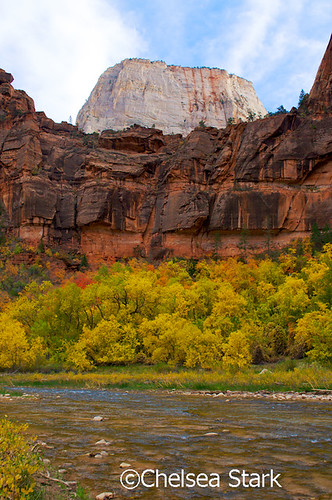
Great white throne" ,Zion National Park

The Great White Throne is a highlight of Zion National Park, itself a world-class showplace of sandstone. The whole edifice consists of the Navajo Sandstone, one of the world's largest sandstone bodies. One of the striking things about the Great White Throne is that while its top is white, its base is red. It is thought that once upon a time the Navajo was a supergiant-class reservoir of petroleum. As the sandstone began to be exposed through erosion, however, the oil and gas escaped, along the way erasing the red sandstone pigments through chemical reduction. This would have been during Cretaceous time, when the atmosphere was extremely high in carbon dioxide compared to today. Whether the massive oxidation of the Navajo oil reservoir and others like it influenced the global atmosphere is an intriguing research problem.

Sunday, May 20, 2012

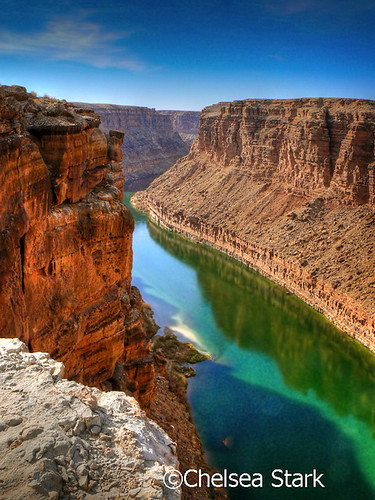
Marble Canyon" Grand Canyon National Park-ChelseaStarkhttp://www.chelseastarkphotography.com

Via Flickr:
Marble Canyon is the section of the Colorado River canyon in northern Arizona from Lee's Ferry to the confluence with the Little Colorado River, which marks the beginning of the Grand Canyon.
Lee's Ferry is a common launching point for river runners starting their journey through the Grand Canyon. Marble Canyon is also well known for the Navajo Bridge, where US Highway 89A crosses the Colorado River.
Marble Canyon marks the western boundary of the Navajo Nation. In 1975, the former Marble Canyon National Monument, which followed the Colorado River northeast from the Grand Canyon to Lee's Ferry, was made part of Grand Canyon National Park.
Sunday, February 19, 2012

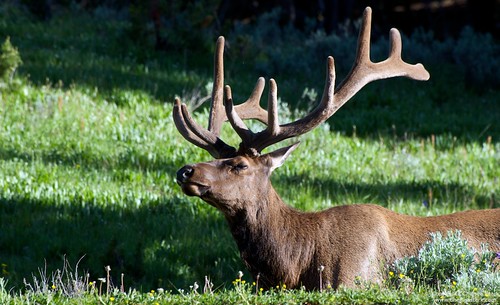
Majestic pose " Yellowstone National Park-


Majestic pose ", a photo by Chelsea A Stark on Flickr.Yellowstone National Park
Elk were once found across much of North America but they were killed off and driven to take refuge in more remote locations. Today they live primarily in western North America, especially in mountainous landscapes such as Wyoming's National Elk Refuge and Yellowstone National Park. Some eastern U.S. states have reintroduced small elk herds into heavily wooded wilderness areas.

Sunday, January 8, 2012

GreyOwl2" Grand Teton National Park-

GreyOwl2" Grand Teton National Park a photo by chelseastarkphotography.com on Flickr.Via Flickr:Owlets begin growing their primary feathers (main, adult feathers) at 3 weeks of age. They have light yellow eyes with blue pupils. Less brooding is necessary and they are very active about the nest. Owlets learn to eject excrement (body waste) over the side of the nest but sometimes fall due to their clumsiness. About this time the owlets begin using a defensive display when disturbed. They raise their feathers, fan their wings downward, and hiss or snap their bill. After 5-6 weeks, the female coaxes the owlets out of the nest by offering food from a nearby branch. At about 9-10 weeks old the owlets first flight out of the nest to the ground. They quickly scramble up a tree to get away from ground level predators. If approached by a predator, they assume a hiding pose by sitting still and erect against the side of the tree. If this pose fails they present the defensive display. Feedings become irregular but the young owlets remain with the female and beg for food until September or October. During mid-June, the young owlets use their inborn instinct to attack prey. Young owls leave their parent's home range in autumn, when they are fully independent and can find their own hunting territory.When a member of the pair dies, the survivor remains in the home territory until another mate arrives.Owls defend their territories from other owls. Defense occurs during breeding times. It lasts from 1 month before breeding until the young owlets leave the parental territory. Adults may wander across territory lines for a short time before the next breeding season begins. They frequently allow other types of birds such as hawks to live in their territory.Owls with large territories frequently spend each season in a different part of their territory. Owls use specific areas of their territory for nesting and roosting. Some birds use certain trees so regularly that observers can predict in which trees they will find the owl in during a specific season.During the winter and fall, owls prefer evergreen roost trees since they provide daytime cover. When these are not available, owls will adapt to any place that provides as much concealment as possible during daylight hours. They seem to prefer to roost in isolated trees in small forest openings.